Do I Need a Permit to Replace Windows in Temecula, CA?
Most window replacements in Temecula require a permit. Learn when you need one, how to get it from the City or County, and what happens if you skip the process.
 Written by Drew Guthrie, Owner & Lead Estimator · Updated April 22, 2026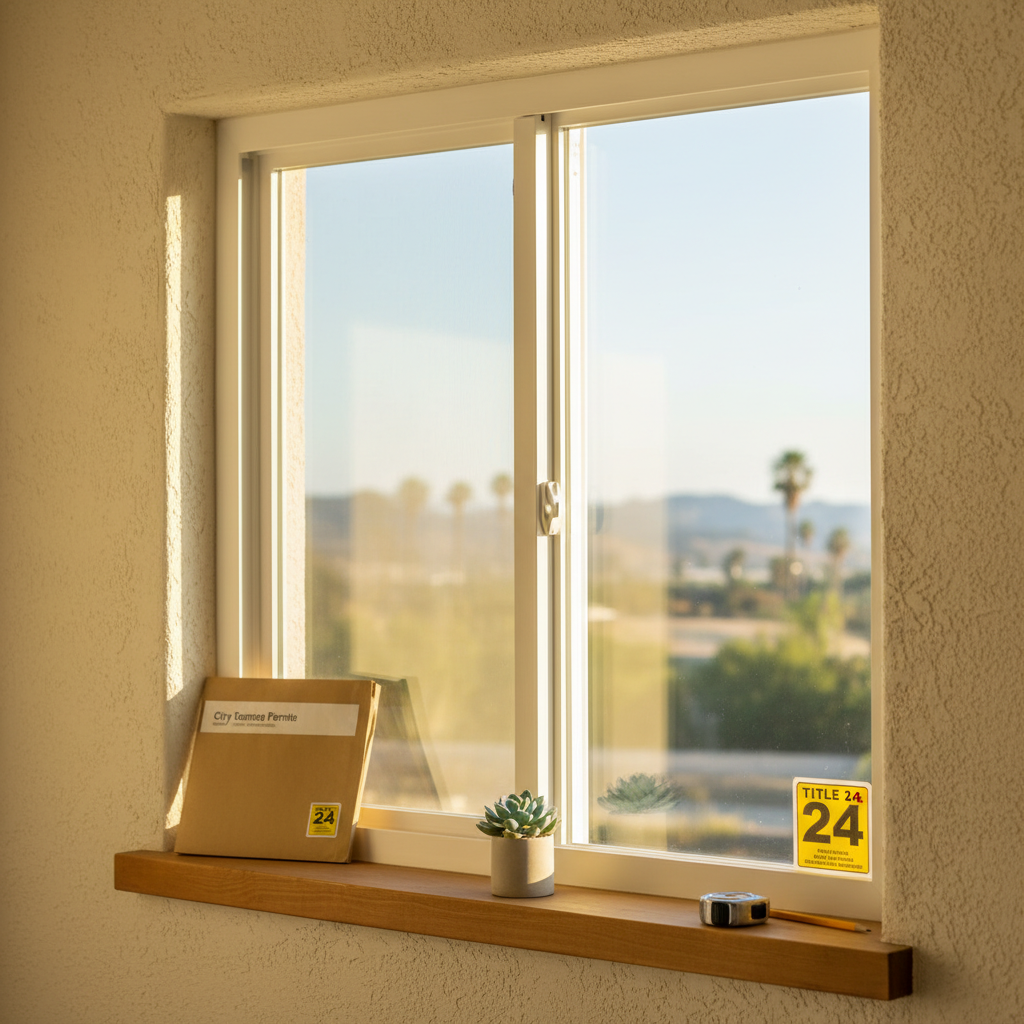

TL;DR
- Yes, you need a permit for almost all window replacements in Temecula, whether you live in city limits (ZIP 92590, 92591, 92592) or unincorporated Riverside County areas (92562, 92563), because California requires Title 24 energy compliance verification.
- The permit costs between $387 and $650 depending on project size and location, and the process takes 1–3 business days for simple like-for-like replacements through the City of Temecula Building & Safety or County of Riverside permit centers.
- Homes in Wildland Urban Interface zones—most of Redhawk, Wine Country, Crowne Hill, and areas near Pechanga—must meet additional CBC Chapter 7A fire safety standards for window assemblies.
- Skipping the permit can cost you $2,000–$5,000 in penalties when discovered during home sales or after-the-fact inspections, and your homeowner's insurance may deny claims for unpermitted work.
- Yes, you need a permit for almost all window replacements in Temecula, whether you live in city limits (ZIP 92590, 92591, 92592) or unincorporated Riverside County areas (92562, 92563), because California requires Title 24 energy compliance verification.
- The permit costs between $387 and $650 depending on project size and location, and the process takes 1–3 business days for simple like-for-like replacements through the City of Temecula Building & Safety or County of Riverside permit centers.
- Homes in Wildland Urban Interface zones—most of Redhawk, Wine Country, Crowne Hill, and areas near Pechanga—must meet additional CBC Chapter 7A fire safety standards for window assemblies.
- Skipping the permit can cost you $2,000–$5,000 in penalties when discovered during home sales or after-the-fact inspections, and your homeowner's insurance may deny claims for unpermitted work.
When exactly do I need a permit to replace windows in Temecula?
Last month, a homeowner in Paloma del Sol called me after the city red-tagged his DIY window project three weeks into the work. He'd replaced eight windows thinking he could skip the permit because he wasn't changing the opening size. Wrong.
The rule is simple: if you're removing a window sash or frame and installing a new window unit, you need a permit. Period. This applies whether you're replacing one window or twenty, whether the new window is the same size or larger, and whether you're doing it yourself or hiring a contractor.
The reason comes down to California Title 24 Part 6—the state energy code that's been tightening for the past fifteen years. Every window replacement affects your home's thermal envelope. The building department needs to verify that your new windows meet minimum U-factor (heat transfer) and SHGC (solar heat gain) ratings for Climate Zone 10, which covers all of Temecula, Murrieta, and most of southwest Riverside County.
According to the California Energy Commission, our zone requires a maximum U-factor of 0.30 and an SHGC of 0.23 for most residential windows. That's not something you eyeball—it's printed on the NFRC (National Fenestration Rating Council) label that comes with every code-compliant window. The inspector will check that label during the final inspection.
The only exception—and it's narrow—is replacing broken glass in an existing frame without removing the sash. If you crack a pane and a glass shop swaps in a new piece of dual-pane glass using the original frame and stops, that's repair, not replacement. Everything else needs a permit.
What's the actual permit process in Temecula?
The process depends on whether you live inside Temecula city limits or in unincorporated Riverside County. Most of ZIP 92590 and 92591 fall under the City of Temecula; parts of 92592, 92562, and 92563 are county jurisdiction. Check your property tax bill if you're not sure—it'll say either "City of Temecula" or "County of Riverside" under the tax collector.
For city permits, you start at the Temecula Building & Safety Division at City Hall on Pujol Street. You can submit in person or online through their permit portal. For county permits, you go through the Riverside County Building & Safety office—either the Jurupa Valley headquarters or sometimes the Southwest Regional office in Murrieta, depending on your parcel.
Here's what you'll submit:
- A completed building permit application with your assessor's parcel number (APN).
- A simple site plan—usually a hand-drawn sketch or marked-up floor plan showing which windows you're replacing.
- Manufacturer spec sheets with NFRC labels proving Title 24 compliance. Brands like Milgard, Anlin, and Andersen provide these as PDFs or printed inserts.
- Your contractor's license number and worker's comp insurance if you're hiring a pro. Owner-builders sign an affidavit instead.
- For WUI areas, add documentation that the window assembly meets CBC Chapter 7A fire ratings—typically a letter from the manufacturer or a tested assembly report.
Plan review for straightforward like-for-like replacements usually clears in 1–3 business days. If you're enlarging openings, adding new windows, or working in Old Town Temecula's historic overlay district, expect 7–14 days because the project goes through additional review.
When we handle window replacement projects for clients, we pull the permit before ordering materials. That way, if the building department flags something—wrong SHGC rating, missing flashing detail, structural concern—we catch it before the windows show up. I've seen homeowners order $8,000 worth of windows only to learn they picked the wrong glass package for their zone. That's a painful return process.
How much does a window replacement permit cost?
Permit fees in Temecula aren't cheap, but they're predictable. As of early 2024, the City of Temecula charges a base fee starting around $387 for residential window replacements covering up to six units. Each additional window adds $18–$25 depending on the project scope. A typical whole-house job—say, twelve windows in a 2,200-square-foot home in Harveston—runs about $525 including plan check and inspection fees.
Riverside County fees are similar but structured slightly differently. They start around $425 for the first four windows and add roughly $20 per window after that. If you're replacing all the windows in a large Wine Country estate—say, twenty-five windows—you're looking at $650–$750 in permit fees alone.
Expedited plan review costs extra—usually $200–$300—and cuts turnaround from three days to one day. I rarely recommend it unless you're on a tight escrow timeline or need the job done before summer heat sets in. Standard turnaround is fast enough for most projects.
If you skip the permit and get caught, the penalty is steep. The city or county will charge you double the original permit fee—so that $525 permit becomes $1,050—plus administrative fines starting around $2,000. I've seen homeowners pay $4,500 to retroactively permit a $6,000 window job. That's more than half the project cost just in penalties.
What are the fire safety rules for windows in Temecula?
Most people don't realize Temecula sits in a high fire-risk area. The hills, the Santa Ana winds that blow through every fall, and the chaparral that blankets the backcountry all contribute. The California Office of the State Fire Marshal classifies much of Temecula as Wildland Urban Interface (WUI), which triggers extra building code requirements under CBC Chapter 7A.
If your home is in a WUI zone—and that includes most of Redhawk, Crowne Hill, Wine Country, the hills above Old Town, and neighborhoods near the Santa Margarita Ecological Reserve or Pechanga land—your windows must meet specific fire performance standards. That means:
- Tempered dual-pane glass with a minimum thickness that resists radiant heat and flying embers.
- Window frames and sashes that meet flame-spread and smoke-development ratings—usually vinyl, fiberglass, or aluminum-clad wood.
- Proper sealing and flashing to prevent ember intrusion around the frame perimeter.
Most major window manufacturers—Milgard, Anlin, Andersen, Jeld-Wen—offer WUI-compliant product lines specifically for California. When you're shopping for windows, ask if the model meets CBC 7A. The manufacturer will provide a compliance letter or tested assembly report that you'll submit with your permit application.
Flat neighborhoods like Harveston, Meadowview, and parts of Paloma del Sol don't usually fall into WUI zones. You'll still need to meet Title 24 energy requirements, but the fire rules don't apply. Check the CalFire WUI map or ask your contractor—better yet, the building department will tell you when you submit your permit.
One thing I'll say from 22 years in this business: even if your home isn't technically in a WUI zone, the Santa Ana winds don't care about jurisdiction lines. In October 2020, we saw embers travel three miles from the Bond Fire in Silverado Canyon all the way to homes in south Temecula. Installing fire-rated windows everywhere is smart insurance, whether the code requires it or not.
What happens during the window permit inspection?
You schedule the inspection after the windows are installed but before you button up trim and caulking. Most jurisdictions want to see the fasteners, flashing, and rough opening before you cover everything with exterior trim. For Temecula city permits, call the inspection line or submit online at least 24 hours in advance. County inspections work the same way.
The inspector checks four main things:
- The NFRC label on each window matches the permit submittal. If you applied for a Milgard Tuscany Series with U-factor 0.29 and SHGC 0.22, that's what the label better say. Swapping in a different model mid-project without updating the permit is a guaranteed fail.
- Installation follows manufacturer instructions. That means correct fastener type (usually galvanized screws, not nails), proper spacing (typically every 8–12 inches around the frame), and adequate shimming so the sash operates smoothly without binding.
- Flashing and water management. In Temecula, we get heavy winter rain—sometimes 2–3 inches in a day during atmospheric river events. The inspector wants to see proper flashing tape over the nailing fin, sill pan flashing that drains to the exterior, and head flashing that sheds water away from the frame.
- Structural soundness. If you've cut or modified framing, the inspector verifies the header is properly sized and the king studs and jack studs are in place. For homes built before 1990, they may check for knob-and-tube wiring or other old-work issues that need remediation.
In WUI zones, the inspector also checks for tempered glass markings (usually etched in the corner of each pane) and confirms the window assembly matches the approved fire-rated model.
The inspection takes 15–25 minutes for a typical whole-house job. If you pass, the inspector signs off and you get a green placard and finaled permit. If you fail—and common reasons include missing flashing, wrong fasteners, or a swapped window model—you fix the issue and schedule a re-inspection, which usually adds 2–3 days to the timeline.
We've never had a project fail inspection in Temecula or Murrieta because we follow the manufacturer install guides to the letter and pre-stage everything the inspector wants to see. The one time a client changed the window color mid-project without telling us, the inspector flagged it because the NFRC label didn't match the permit. We had to update the permit and re-inspect three days later. Lesson: don't change anything after permit approval without notifying the building department.
Do I need a permit if I'm also replacing doors?
Yes, and you can usually combine windows and doors on a single permit. Entry door replacements—whether steel, fiberglass, or wood—fall under the same Title 24 energy rules as windows. Exterior doors need a U-factor rating (usually 0.20 or lower for Climate Zone 10) and proper weatherstripping. Sliding glass doors and French doors count as fenestration and require the same SHGC and U-factor compliance as windows.
When we handle combined door replacement and window projects, we list everything on one permit application with separate line items. That saves you a second permit fee and a second inspection. The inspector checks doors the same way as windows—NFRC label, proper installation, flashing, and structural support.
One wrinkle: if you're replacing a sliding glass door with a French door or adding a door where there wasn't one, that's a more involved permit because you're changing the egress and sometimes the structural framing. Expect longer plan review and possibly an engineered calculation for the header. We did a project in Crowne Hill last year where the homeowner wanted to swap a picture window for a French door leading to a new deck. That required engineered drawings, Title 24 compliance, and a structural inspection before the final. Still worth it, but not a 1-day permit.
Can I get in trouble for unpermitted window work?
Absolutely, and it happens more often than you'd think. Here's how unpermitted window work usually gets discovered:
- During a home sale. Title companies and buyer agents often order a permit history search from the city or county. If your windows look newer than the last permit on file, they'll flag it. The buyer can demand you retroactively permit the work, reduce the sale price to cover the risk, or walk from escrow.
- Code enforcement complaint. If a neighbor sees a contractor working without a permit placard posted, they can call the city. Code enforcement shows up, issues a stop-work order, and requires you to pull the permit retroactively.
- Insurance claim. If a wildfire, storm, or break-in damages your new unpermitted windows and you file a claim, your insurer may deny coverage for the unpermitted work. I've seen this happen twice in the past five years—once after the Fairview Fire in 2022 near Hemet and once after a home burglary in Menifee where a slider was damaged.
- Random building inspection. If you pull a permit for something else—say, a bathroom remodel—and the inspector notices new windows that aren't on file, they'll flag it and require you to open a separate permit for the windows before they'll sign off on the bathroom.
The penalty for after-the-fact permits in Temecula starts with double the original permit fee. So if the permit would have cost $525, you're now paying $1,050 just for the permit. Add administrative penalties—usually $2,000–$3,000 for a first offense—and you're looking at $3,000+ before you even fix any code violations the inspector finds.
If the windows don't meet Title 24 or WUI requirements, the building department can require you to remove and replace them with compliant models. I've heard of homeowners spending $12,000 to replace $8,000 worth of windows because they bought the wrong product and skipped the permit. The math never works out in your favor.
What about historic homes in Old Town Temecula?
Old Town Temecula—roughly bounded by Rancho California Road, Moraga Road, and Pujol Street—has a historic overlay zone that adds extra review steps for exterior alterations. If your home was built before 1950 or sits within the historic district, you'll go through design review before you can pull a building permit.
The Old Town Design Review Committee meets monthly and evaluates proposed changes for compatibility with the district's architectural character. For windows, they care about:
- Muntin patterns and divided-lite appearance. Modern vinyl windows with snap-in grilles won't fly if your home has true divided-lite wood windows. You may need simulated divided-lite windows with exterior muntins and internal spacer bars.
- Frame color and finish. Bright white vinyl may not match the district's aesthetic. Some projects require custom-painted aluminum-clad or fiberglass windows in heritage colors.
- Window proportions. If you're replacing a tall, narrow double-hung window, the committee may not approve a wider slider or casement.
Design review adds 4–6 weeks to the timeline and sometimes requires a variance if the committee denies your first submittal. Once you get design approval, you submit for the building permit through the normal process. The building inspector still checks Title 24 compliance and installation quality—historic exemptions don't waive energy code.
We've worked on a handful of Old Town projects, and my advice is always the same: hire an architect or designer who knows the district's guidelines. Submitting a design that doesn't fit the character just delays the project and frustrates everyone. The committee members are volunteers and they care deeply about preserving the area's history. Show them you respect that and they'll work with you.
Should I hire a contractor to handle the permit?
In my opinion—and I'm obviously biased—yes. Not because pulling the permit is hard, but because the permit is only one piece of the process. The real value a licensed contractor brings is knowing which windows meet code before you buy them, how to install them so they pass inspection the first time, and how to handle surprises that come up mid-project.
I've seen DIY homeowners order the wrong windows—wrong U-factor, wrong SHGC, wrong glass package—because they didn't understand Climate Zone 10 requirements. I've seen them install windows without flashing and fail inspection. I've seen them skip the permit entirely and face $4,000 penalties during a home sale.
When you hire a licensed contractor, the permit cost is usually baked into the project price. We pull the permit, schedule the inspection, and guarantee the work passes. If something goes wrong, we fix it at no extra charge. If you pull the permit yourself and something fails, you're on the hook for the re-inspection fee and the cost to fix the issue.
One more thing: a licensed contractor carries liability insurance and worker's comp. If someone gets hurt on your property during a DIY window install, your homeowner's insurance may not cover it. If a contractor's employee gets hurt, their worker's comp covers it. That's worth the extra cost right there.
If you're determined to DIY, at least get a consultation from a contractor or a Title 24 consultant before you order materials. Pay someone $200–$300 to verify your product selection and review the permit requirements for your specific location. It's cheaper than buying the wrong windows or failing an inspection.
People Also Ask
What happens if I replace windows without a permit in Temecula?
The City of Temecula or Riverside County can issue a stop-work order and require you to pay double the original permit fee plus administrative penalties starting around $2,000. When you sell your home, title companies often flag unpermitted work during escrow, forcing you to retroactively permit the work or reduce your sale price. Homeowner's insurance may also deny claims related to unpermitted windows if damage occurs.
How long does a window permit take in Temecula?
Simple like-for-like window replacements using pre-approved manufacturers typically clear plan review in 1–3 business days at Temecula City Hall or the County permit center in Riverside. If your project involves structural changes, size increases, or historic properties in Old Town, expect 7–14 business days. The inspection itself takes about 20 minutes once the windows are installed and the inspector arrives on-site.
Can I replace just one window without a permit?
No. California law requires a permit for any window replacement that affects the building's energy compliance, which includes single-unit changes. Even replacing one broken window with a new dual-pane unit triggers Title 24 documentation requirements. The only true exception is replacing broken glass in an existing frame without removing the sash or frame—but that's glass repair, not window replacement.
Do I need an engineer for a window replacement permit?
Most standard window replacements don't require an engineer's stamp. If you're enlarging a window opening, installing a new window where none existed, or working on a second story where the replacement affects structural framing, the building department may require engineered calculations. Homes built before 1978 in Old Town Temecula or custom Wine Country properties sometimes need engineering review for unusual conditions.
Does HOA approval count as a permit in Temecula?
No. Your HOA approval in neighborhoods like Harveston, Paloma del Sol, or Meadowview is separate from the city or county building permit. You need both. The HOA cares about exterior color, style, and architectural guidelines. The building department cares about structural integrity, energy code, and fire safety. Get HOA approval first since it's usually faster, then submit for the building permit.
FAQ
How much does a window replacement permit cost in Temecula?
As of 2024, the City of Temecula charges a base permit fee starting at $387 for simple residential window replacements covering up to six window units. Each additional window adds roughly $18–$25. If you're in unincorporated Riverside County (parts of 92562, 92563, or 92584 near the Temecula border), county fees start around $425. Large projects—say, replacing all the windows in a 3,000-square-foot home in Redhawk—run $550–$650 including plan review and two inspections. Expedited plan check adds another $200–$300 if you're in a hurry. These fees change annually, so always confirm current rates before you budget.
What documents do I need to apply for a window permit?
You'll need a completed building permit application with your parcel number (find it on your property tax bill), a site plan showing which windows you're replacing, manufacturer spec sheets proving Title 24 compliance (U-factor, SHGC ratings, and NFRC labels), and your contractor's license number if you're hiring a pro. For WUI zones, add the window assembly's fire rating certification. The city uploads forms at temeculaca.gov; the county uses rivcobos.org. Most window companies handle this paperwork for you—we certainly do for our clients—because one missing spec sheet can delay approval for days.
Do all Temecula neighborhoods require the same window permits?
The permit process is the same, but the code requirements differ by location. Homes in WUI fire zones—including most of Wine Country, the hills above Redhawk, Crowne Hill, and areas bordering Pechanga and the Santa Margarita Ecological Reserve—must meet CBC Chapter 7A standards. That means tempered dual-pane glass, specific flame-spread ratings, and sometimes ember-resistant screens. Flatland neighborhoods like Harveston and Meadowview follow standard Title 24 energy rules without the extra fire requirements. Old Town Temecula has historic overlay rules if your home was built before 1950, requiring design review before you submit for a building permit. Your contractor should know your zone before quoting the job.
Can a homeowner pull their own window permit in Temecula?
Yes, but only if you're the legal owner occupying the property and doing the work yourself. The city allows owner-builder permits, but you'll sign an affidavit acknowledging you're responsible for code compliance and that unpermitted or faulty work can affect resale and insurance. You'll still need to provide Title 24 compliance forms, schedule inspections, and ensure the windows meet all energy and fire codes. Most homeowners hire a licensed contractor because one mistake—wrong U-factor, missed flashing detail, failed inspection—can snowball into expensive callbacks. We've repaired more DIY window installs in Murrieta and Temecula than I can count, and the permit was rarely the hard part; the installation was.
What does the window permit inspection actually check?
The inspector verifies four things: the window's NFRC label matches the permit application, the installation follows manufacturer instructions (proper fastener spacing, flashing, sealant), the rough opening is structurally sound, and the new window meets Title 24 energy performance. In WUI areas, they'll also check for tempered glass markings and fire-rated assembly compliance. The inspection takes 15–25 minutes for a straightforward job. If you pass, you get a green tag and a signed-off permit. If you fail—say, missing flashing or wrong fasteners—you fix it and call for a re-inspection, which usually adds 2–3 days. One common fail: using non-galvanized screws near the coast or in areas with Santa Ana wind-driven moisture.
Are permits required for window replacement in condos or townhomes?
Yes, if you're replacing the window unit itself. Condos and townhomes in Temecula (common in Harveston, Temeku Hills, and Paloma del Sol) still fall under city or county building codes. Even though the HOA owns the exterior structure in many cases, any alteration to a window opening or energy envelope requires a permit. Your HOA will usually require you to submit architectural review first, then you or your contractor pull the building permit. Some HOAs coordinate group window replacement projects and handle permitting in bulk, which can save time and money. Always check your CC&Rs to see who's responsible for windows—some HOAs cover it, some put it on the homeowner.
—
Drew Guthrie is the owner of Temecula Windows & Doors and has been installing windows, doors, and sundeck systems across Southwest Riverside County for 22 years. For help with your next window or door replacement project, call (951) 757-4340.
Ready for a written quote?
Call (951) 757-4340 or request a free quote online. Drew will be at your door within a week.