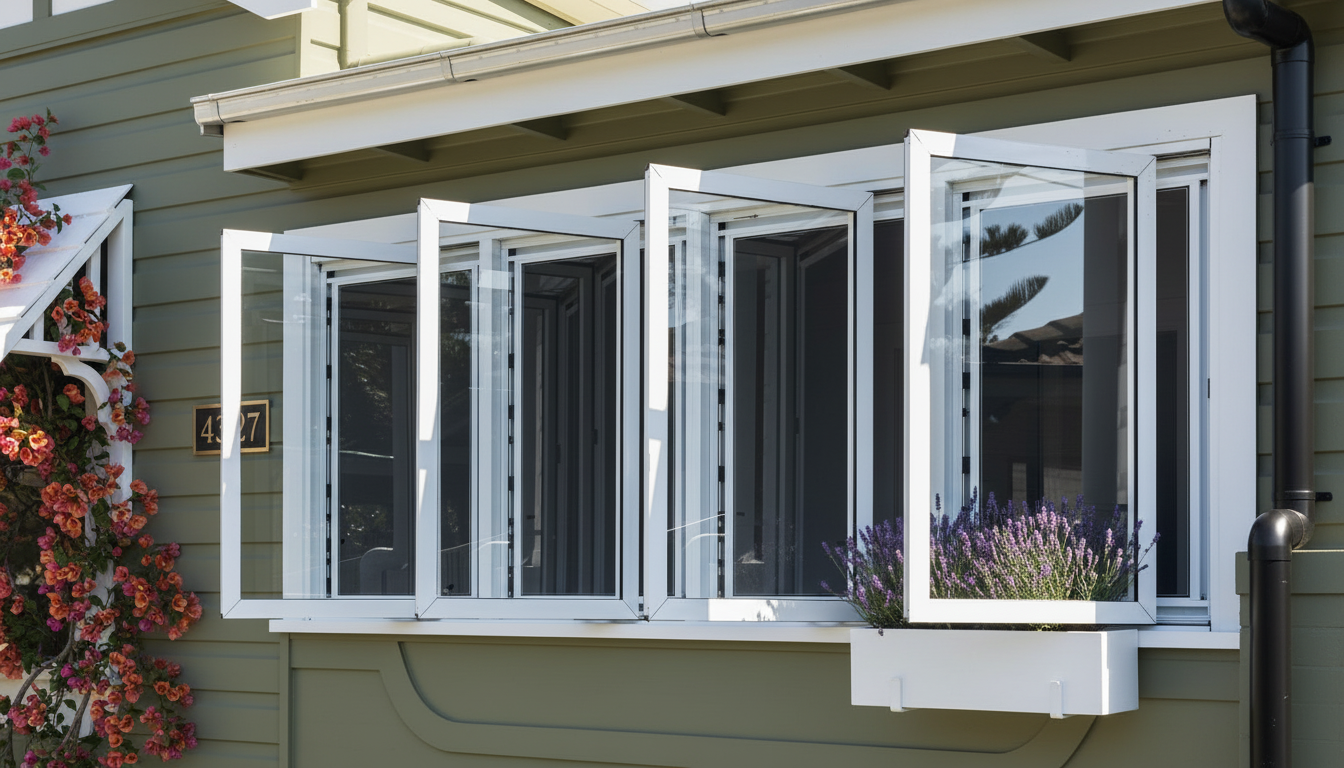
Window Replacement
Window Replacement in Temecula & Southern California
When the Temecula fire season starts and the first Santa Ana pushes dust through the old sliders, the calls pick up. Hot, dry summers with afternoon highs regularly above 95 F, cool evenings, and occasional Santa Ana wind events in fall that push fine dust through unsealed sashes. Near Pechanga Resort, we see 20-40 year old aluminum single-pane units that fail every Title 24 metric on the books and leak conditioned air every summer afternoon.
What homeowners come to us for — window replacement
What we find on Temecula measure visits: rolled-up towels jammed against sliders to block drafts, painted-shut casements that haven't opened since the last owner, and master bedrooms with bedside thermometers reading 82 F at midnight. Vail Ranch and Redhawk homes trend older; HOA limits in some tracts lock the frame color and grid pattern, which changes the product short-list before we even open the catalog.
The pattern I see every summer in Temecula: west-facing bedrooms hit 82-85 F by 4 p.m., the AC runs non-stop from 2 to 8, and the homeowner's PG&E or SCE bill climbs past $400 in July. Nine times out of ten the windows are the leak, not the HVAC. Aluminum frames in 1970s-90s tract homes transfer heat directly through the extrusion — the frame itself radiates like a stovetop coil by mid-afternoon. The seal inside the dual-pane unit on 2000s-era builder-grade vinyl is usually blown too, which means you've got moisture condensing between panes and a U-factor that's drifted up from 0.35 to closer to 0.50. The NFRC sticker you threw out 15 years ago would tell you the truth; the fog between the panes is easier to read.
The second pattern is operability. Sliders stop sliding. Casements stop cranking shut. Single-hungs get painted in place during a cheap remodel and never come back up. I walked a Redhawk home last month where the primary bedroom egress window hadn't opened in six years — the homeowner had a crib in there during the kid's toddler years and never got it to work again. That's a life-safety issue on top of an energy-efficiency one. The 2022 CRC Section R310 still requires 5.7 sq ft net clear opening on upper-floor sleeping rooms and 5.0 sq ft on ground-floor rooms, and a painted-shut casement doesn't count.
The third pattern is cosmetic that turns structural. Old aluminum frames near Temecula Valley Wine Country oxidize and chalk; the seal between frame and stucco cracks; water rides that crack down through the sill and rots the framing. By the time you see a paint bubble under the window it's been wet inside the wall for two winters. I've pulled windows on Redhawk jobs where the framing lumber underneath was black with mold and crumbling. The window change is then also a structural repair. We quote both line items separately so you can see exactly what the water did.
Products and brands we install in Temecula
Product selection in Temecula runs on two axes: frame material and glazing package. Vinyl wins on price (budget-premium vinyl, mid-premium vinyl); fiberglass wins on paintability and long-run dimensional stability (entry-premium fiberglass-composite, fiberglass multi-slide). Glass package is the bigger lever — Low-E 366 over Low-E 340 cuts solar gain by ~15% on the southwest Temecula elevations that take the worst summer sun.
On a west-facing Redhawk elevation I spec budget-premium vinyl — not the mid-premium tier — because the vinyl extrusion holds color better in UV 10+. The budget-premium tier's welded-corner construction seals tighter over 20 years than the mid-premium tier's mechanical corners, but the mid-premium tier still wins on triple-weatherstripping and on the operable sash weight — I put mid-premium vinyl on north-facing and east-facing openings where UV is lower and the triple-seal buys you an extra 5 dB of sound attenuation on homes near the I-15 corridor. entry-premium fiberglass-composite is our paint-grade option — it takes a factory painted finish in 30+ colors, holds it through UV, and runs about 20% above vinyl. For homeowners who want the look of wood without the maintenance, entry-premium fiberglass-composite is the answer.
Glazing package is the bigger lever than frame material. The default Title 24 spec for Temecula is Low-E 340 with argon fill — that hits 0.30 U-factor and 0.25 SHGC, which clears Climate Zone 10 compliance. We almost always upgrade to Low-E 366 on west- and south-facing elevations. The 366 coating drops SHGC to 0.18-0.21, which means roughly 15% less solar heat gain through the glass on the afternoon-exposure walls. That's worth about $800-$1,500 a year on cooling costs for a typical 2,400 sq ft Temecula home. The glazing upgrade runs $40-$80 per window; payback is usually three to five cooling seasons.
Warranty is where the market plays games. Budget-premium vinyl brands typically carry a Full Lifetime warranty covering frame, sash, glass, and hardware for as long as you own the house — and the major manufacturers honor it; I've filed claims at year 14 and 19 and they paid both. Mid-premium vinyl typically carries a transferable Double Lifetime warranty to the second owner, which matters in Temecula because the average home tenure is about 9 years. entry-premium fiberglass-composite is 10 years on glass, 20 on frame. The fine print that kills most other brands is "limited transferability" and "proof of professional installation" — both of which get challenged if a homeowner swapped one seal pack themselves. We keep our install records on file so if a warranty claim comes up 10 years out, we can provide documentation.
We install in Temecula, Murrieta, Menifee, Wildomar, Lake Elsinore, Hemet, and 8 more nearby cities. See the full list on our service areas page or jump straight to window replacement in Murrieta.
What Temecula Climate Zone 10 does to poorly-specified window replacement
Temecula lives in California Climate Zone 10 — the hottest residential climate zone in Title 24 Part 6. Summer afternoon highs hit 100-108 F on most days from mid-June through late September. The UV index 10-11 drives photodegradation of vinyl extrusions, pigment breakdown in frame paint, and thermal cycling on glass seals. A poorly-specified window in this climate fails three ways. First, thermal cycling — the frame expands and contracts 1/8" to 3/16" across a 50 F day-night swing, which walks the corner welds loose on cheap vinyl and cracks the glazing seal on builder-grade dual-pane units. Once the seal cracks, argon escapes, the dew point moves between the panes, and you see the classic "foggy window" failure. I've seen it happen as early as year seven on contractor-grade vinyl installed without low-expansion foam at the perimeter. Second, UV damage — cheap vinyl yellows, chalks, and becomes brittle under sustained UV 10+ exposure; I've pulled 12-year-old builder vinyl where the extrusion snapped in my hand during removal. Third, Santa Ana wind load — the dust storms that come out of the Cajon Pass twice a year push fine silt through any gap in the weatherstripping, and the abrasive load cuts through cheap polypile weatherstripping in five to seven years. The specification that survives Temecula climate: welded-corner vinyl or fiberglass frame (budget-premium vinyl, mid-premium vinyl, or entry-premium fiberglass-composite from every major manufacturer), Low-E 366 with argon fill on west and south exposures, triple-weatherstrip sash, and low-expansion foam at the perimeter on install. That package holds to 20-25 years with NFRC-certified performance. The package that fails: builder-grade vinyl with miter-cut corners, Low-E 340 standard glazing, single-weatherstrip, and fiberglass batting stuffed in the perimeter. That one starts failing at year eight and is usually replaced by year twelve.
Our window replacement process
Projects in Temecula move in four beats: measure (one visit), quote + sign (48 hours), order + lead time (4-6 weeks), install (1-2 days on site). We never subcontract the install crew. Sill-pan flashing, building-paper integration, and exterior caulk go in every opening. Stucco touch-up is included for same-size retrofits; new-construction flange installs get their own stucco line in the quote.
The measure visit is free and takes 45 minutes to 90 minutes depending on window count. We bring a laser measure, a moisture meter for the existing frames and sill, and a color chip book. I measure every opening three times — width top, middle, bottom; height left, middle, right — because stucco homes in Temecula frequently have 1/4" to 1/2" variance at the jambs after 20-30 years of settling. We photograph every opening, note operation (XO, OXO, casement, single-hung), grid pattern, and any HOA approval history the homeowner has. The quote comes back inside 48 hours with per-window pricing, the Title 24 compliance plan, permit line item, and manufacturer spec sheets.
Product lead time runs 4-6 weeks for standard budget-premium vinyl and mid-premium vinyl. entry-premium fiberglass-composite runs 5-8 weeks. Custom sizes and custom colors add 2-4 weeks. We don't book the install day until the product lands in our warehouse and passes a visual check — factory damage happens on 1-2% of shipments and we'd rather redelivery than install a damaged unit. Install day is one crew of three to four people, one to two days on site for a whole-home 12-20 window project.
Install sequence per opening: mask interior with plastic and canvas, remove interior stops, score exterior caulk, cut the fin or frame as needed, remove the old unit, inspect the rough opening for moisture and framing damage, install sill-pan flashing (Grace Vycor or DuPont FlexWrap), set the new unit, shim plumb and level, fasten through the fin or the jamb, insulate the perimeter with low-expansion foam, flash the head with building-paper integration, caulk exterior, replace interior stops, apply manufacturer trim, and punch-clean. That's 45 minutes to 2 hours per opening depending on complexity.
Install sequencing and what a window replacement day on your home looks like
Install day on a Temecula window project runs from 7:30 a.m. to 4:30 p.m. — one crew of three to four people, one to two days total depending on window count. We arrive, meet the homeowner, confirm scope on paper, lay drop cloths from front door to work area, and mask the interior with plastic at every opening. Exterior scaffold or ladders go up; the crew splits into a removal team and an install team. The removal team cuts exterior caulk with a utility knife, scores the paint line at the interior trim, removes the interior stops or trim, unscrews the old unit from the flange, cuts the flange or sill if needed, and pulls the old window. They inspect the rough opening for moisture, framing rot, or stucco damage — that inspection takes 2-5 minutes per opening and drives any change-order conversation. The install team follows with sill-pan flashing (Grace Vycor or DuPont FlexWrap cut to the opening), sets the new window in the opening, shims it plumb and level to within 1/8", fastens through the flange or the jamb per manufacturer spec, insulates the perimeter with low-expansion foam (never batting — batting doesn't fill the gap and doesn't stop air leakage), runs building paper integration over the top flange, caulks the exterior with OSI Quad, replaces the interior stops, and moves to the next opening. A standard opening install runs 45 minutes to 90 minutes; a custom or oversize opening can take 2-3 hours. The Riverside County inspector typically shows up late morning on day two to verify Title 24 compliance, sill-pan flashing installation, and any egress openings. We walk the inspector through every opening, answer any questions, and sign the permit. Punch-clean follows — we haul every old window and every bit of debris off-site, broom-sweep the interior, wipe down the new glass, and walk the homeowner through operation before we leave.
Permits, Title 24 & HOA considerations
Permit + code flow in Temecula: we file the permit, prepare the Title 24 CF1R forms, and meet the inspector for the final walk. Riverside County + City of Temecula follow the 2022 California Residential Code (CRC) and Title 24 Part 6 — U-factor ceiling for new windows is 0.30 in Climate Zone 10. Most master-planned communities (Redhawk, Paloma del Sol, Harveston) run HOA architectural review — we submit the product spec sheet and exterior color chip with your application. If the opening is a legal egress, the 5.7 sq ft (upstairs) or 5.0 sq ft (ground-floor) net-clear calculation gets noted on the quote so there's no inspection surprise.
What window replacement costs in Temecula
Temecula window-replacement pricing (installed, 2026): $700-$1,400 per standard dual-pane vinyl unit; $1,600-$2,200 per custom or oversize fiberglass unit; whole-home 1,800-sf projects at $12K-$22K and larger 2,800-sf homes at $20K-$38K. All prices include Title 24 compliance, Temecula permit fees, and debris haul-away. Written quote guarantee — if the number changes after sign-off, we eat it.
What drives the price up on a Temecula window job: frame material (vinyl $, fiberglass $$), size and shape (standard rectangles cheapest, arched and shaped custom up to 2x), glazing package (Low-E 340 standard, Low-E 366 +$40-$80 per window, triple-pane +$200-$400), grid pattern (grilles-between-the-glass adds $50-$100 per window), and any rough-opening work (rotted framing, enlarged openings, egress retrofits). A 15-window project in a 1995 Temecula tract home with standard openings, budget-premium vinyl vinyl, Low-E 366 on west and south, prices at $14K-$18K. Same house with entry-premium fiberglass-composite in a custom color prices at $22K-$28K. Same house with all fiberglass casements and oversize picture windows prices at $28K-$38K.
Financing is something we help with but don't push. Most Temecula homeowners pay cash or HELOC on window projects under $20K. Over $20K the conversation shifts to 0% APR promo financing through GreenSky or similar (we don't earn a kickback on financing — it's a pass-through), or PACE financing on the property tax (which I generally advise against because the rate adds to the tax bill and follows the property at sale). We'll run the math with you and tell you which route costs less over the project life.
Written quote means the number in the signed agreement is the number we bill unless you change the scope. If we find rotted framing on the measure visit we flag it before contract; if we find it on install day (which happens on maybe 1 in 20 Temecula jobs) we stop, photograph, send you the change-order pricing, and you approve or decline before we proceed. No verbal change orders. No "while-we're-here" add-ons invoiced at the end.
How Drew writes a window replacement quote — what's inside the scope of work
When I write a Temecula quote, it's a six-page document, not a napkin number. Page one is the scope summary — service address, window count, manufacturer, frame material, glazing package, grid pattern, color, hardware. Page two is the line-item pricing: per-window cost, Title 24 CF1R paperwork, permit fee to the City of Temecula or Riverside County, haul-away, sales tax. Page three is the product spec sheets from the manufacturer with NFRC labels and U-factor documentation. Page four is the written warranty — 2-year workmanship from Temecula Windows & Doors, lifetime frame warranty from every major manufacturer, 10-20 year glass warranty depending on manufacturer. Page five is the project schedule — measure date, product order date, expected lead time, install window, inspection date. Page six is the payment schedule — typically 10% at signing, 40% at product order, 50% at final inspection and homeowner sign-off. No balloon payments, no surprise "shop supplies" fees, no verbal change orders. If we find rotted framing or unexpected conditions, we stop, photograph, and issue a written change order before proceeding. You see the number before we charge for it.
Why homeowners choose Temecula Windows & Doors
Drew Guthrie owns and runs Temecula Windows & Doors. When you call, you talk to the owner. When the crew shows up, it's our crew — not a subcontractor swapped in the day before. We carry full Riverside County and San Diego County licensing, pull our own permits, and write a 2-year workmanship warranty on every install — plus the manufacturer's limited lifetime warranty on the glass and frame.
Ready to get a real quote for window replacement? Call (951) 757-4340 or request one online.
Window Replacement by city
- Window Replacement in Temecula
- Window Replacement in Murrieta
- Window Replacement in Menifee
- Window Replacement in Wildomar
- Window Replacement in Lake Elsinore
- Window Replacement in Hemet
- Window Replacement in Fallbrook
- Window Replacement in Escondido
- Window Replacement in San Marcos
- Window Replacement in Vista
- Window Replacement in Carlsbad
- Window Replacement in Oceanside
- Window Replacement in Rancho Bernardo
- Window Replacement in Poway
Window Replacement — FAQs
How much does window replacement cost in Temecula?
What are the best replacement windows for Southern California heat?
Are vinyl windows good in wildfire zones?
How long does a window replacement take in Temecula?
Do I need a permit to replace windows in Temecula?
What Title 24 U-factor do my new windows need to meet?
Keep Exploring
Other services we install
Top Service Cities
Where we install the most
Background Reading
Owner-written field notes
Pricing, product selection, permit rules, and why certain installs fail in Temecula's desert climate.
Visit the BlogStart your window replacement project
In-home measure, written quote, and no pressure. We book a window, you book the rest of your day.