Energy Efficient Windows in Temecula: A Contractor's Breakdown of Title 24, U-Factors, and What Actually Works
Energy efficient windows Temecula homeowners need to pass Title 24. Real U-factor specs, SHGC requirements, and the glass packages that hold up to Inland Empire summers.
 Written by Drew Guthrie, Owner & Lead Estimator · Updated May 19, 2026
TL;DR
- Energy efficient windows Temecula homeowners need to pass Title 24.
- Real U-factor specs, SHGC requirements, and the glass packages that hold up to Inland Empire summers.
Energy efficient windows in Temecula aren't a luxury upgrade. They're a building code requirement.
California's Title 24, Part 6 Energy Code caps the U-factor and solar heat gain coefficient (SHGC) of replacement windows. In Temecula's Climate Zone 10, replacement windows need a U-factor of 0.30 or lower and an SHGC of 0.23 or lower, with a looser allowance of U-0.40 and SHGC 0.35 for jobs that replace 75 square feet of glass or less. On a permitted job, the numbers are checked against the window's rated values.
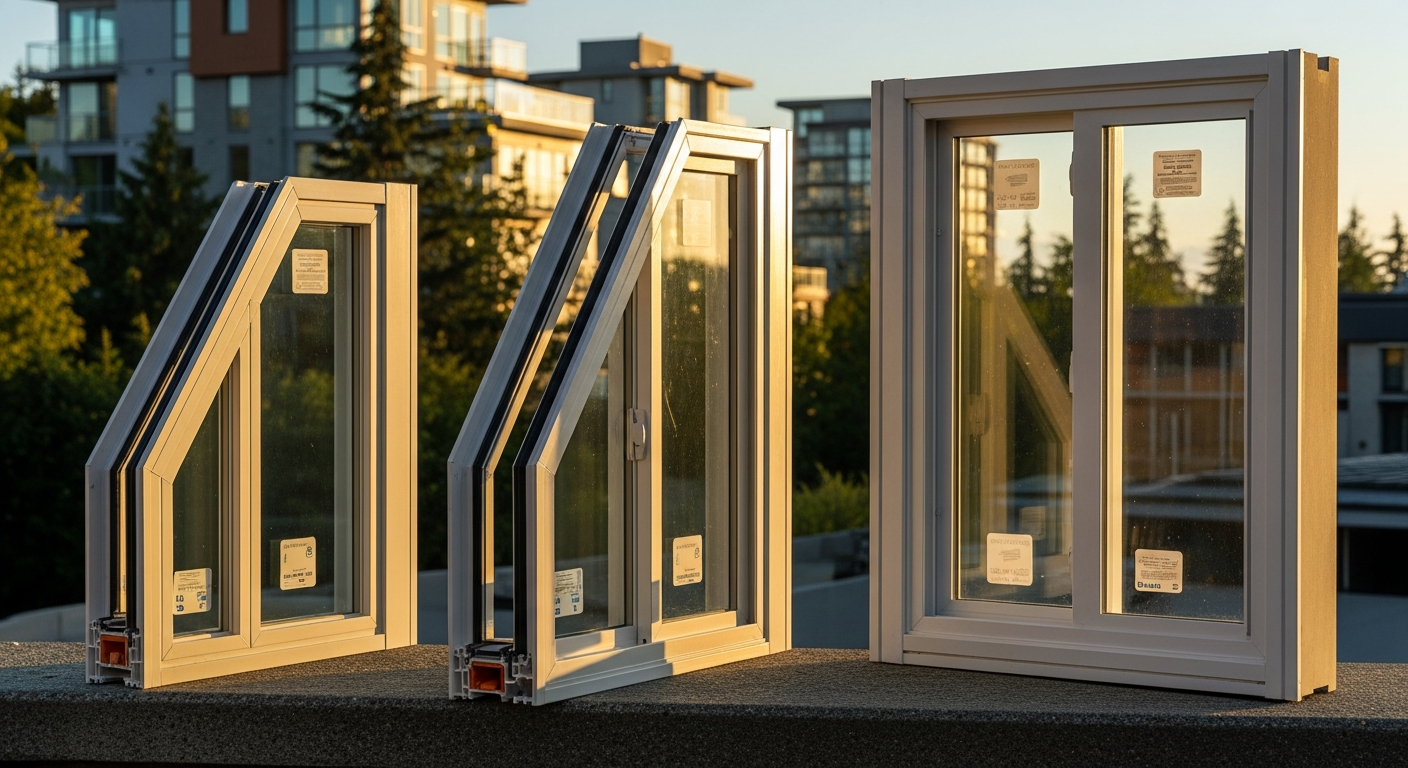
Here's what those requirements mean for you. And why the glass package your contractor picks matters more than the brand name on the frame.
- Temecula (ZIP codes 92590, 92591 and 92592) is in California Energy Code Climate Zone 10. Replacement windows there need a U-factor of 0.30 or lower and an SHGC of 0.23 or lower, unless the job replaces 75 square feet of glass or less.
- The U.S. Department of Energy says heat gain and heat loss through windows are responsible for about 25–30% of residential heating and cooling energy use.
- The right glass package for Temecula is dual-pane, low-e coated, argon-filled — not just "double pane."
- An ENERGY STAR label doesn't prove Title 24 compliance. Check the NFRC-rated U-factor and SHGC against the Climate Zone 10 limits.
- Every quote from Temecula Windows & Doors itemizes the frame system, glass package, U-factor, and SHGC before you sign anything.
What Does "Energy Efficient" Actually Mean for Temecula's Climate?
Most people think energy efficiency is a cold-climate problem. Minnesota. Vermont. Keeping warmth inside during winter.
Temecula's problem goes the opposite direction.
Temecula summers are hot and sunny. In July, your windows aren't losing heat. They're letting solar radiation into your living room.
That's why SHGC — solar heat gain coefficient — is the critical number. Not just U-factor alone.
U-factor measures how fast a window conducts heat. Lower is better. SHGC measures how much solar energy passes through the glass. In Climate Zone 10's hot-dry summer, a high SHGC works like a greenhouse panel aimed at your air conditioner.
The California Energy Commission's 2025 Energy Code, which applies to permit applications submitted on or after January 1, 2026, sets these prescriptive maximums for Climate Zone 10 (Table 150.1-A). They are the same values the 2022 code used:
- U-factor: ≤ 0.30
- SHGC: ≤ 0.23
Both are area-weighted averages across the new windows and glazed doors, and the SHGC limit applies on every orientation. A replacement job of 75 square feet of glass or less may instead meet U-0.40 and SHGC 0.35 (Exception 1 to Section 150.2(b)1B). Glass replaced inside an existing sash and frame counts as a repair, as long as the new glass performs at least as well as the old.
Why Do Windows Account for So Much Energy Loss?
According to the U.S. Department of Energy, heat gain and heat loss through windows are responsible for about 25–30% of residential heating and cooling energy use. That's why the glass specification deserves as much attention as the frame.
Many older Temecula homes still have original aluminum-frame windows with no thermal break, or early dual-pane units whose seals have failed. Aluminum conducts heat far more readily than vinyl, so an unbroken aluminum frame carries summer heat straight through the opening. The Energy Code puts a default U-factor of 0.79 on an unrated metal-frame operable double-pane window, more than two and a half times the Zone 10 limit.
What Glass Package Should a Temecula Homeowner Actually Specify?
"Double pane" is not a spec. It's a category. Inside that category are dozens of glass combinations. They have completely different thermal performance.
A properly specified energy efficient window for Temecula includes:
Frame system: vinyl, fiberglass, or thermally broken aluminum. A plain metal frame makes the 0.30 U-factor limit hard to reach, so read the NFRC rating for the complete unit rather than assuming.
Glass unit: a dual-pane insulated glass unit (IGU).
Low-e coating: a spectrally selective low-e coating lets visible light through while cutting solar heat. Coatings vary, so compare the SHGC and visible transmittance (VT) on the NFRC label.
Gas fill: argon between the panes. Argon conducts heat less than air, which slows heat transfer across the gap.
Combined result: check the NFRC label for the complete window, not the glass alone. For Climate Zone 10 you want a U-factor of 0.30 or lower and an SHGC of 0.23 or lower.
This is the glass package that goes on every window replacement quote we write. It's for Temecula and Southwest Riverside County. The spec is in writing before you sign. Not verbal. Not "energy efficient double pane." Actual NFRC-rated values.
Does ENERGY STAR Certification Guarantee Title 24 Compliance?
No. The two programs use different climate zones and different limits.
ENERGY STAR is a federal program. The EPA and DOE administer it. It uses regional climate zones mapped at the federal level. California's Title 24 is a state building code. Local permit offices enforce it. The two systems use similar metrics. But they have different zone definitions and different compliance pathways.
ENERGY STAR Version 7.0 criteria, in effect since October 23, 2023, require a U-factor of 0.28 or lower and SHGC of 0.23 or lower in the South-Central zone, and a U-factor of 0.32 or lower and SHGC of 0.23 or lower in the Southern zone. The SHGC matches Title 24's Climate Zone 10 limit, but a Southern-zone ENERGY STAR window can carry a U-factor above Title 24's 0.30. Look up your county in ENERGY STAR's Climate Zone Finder.
The Title 24 paperwork for a permitted job uses NFRC-certified U-factor and SHGC values. A product without ratings has to use the Energy Code's default values, which are far higher than the Zone 10 limits. Inside Temecula city limits, permits go through the City of Temecula Building & Safety Division; unincorporated addresses go through Riverside County.
On our jobs, the NFRC values go on the Title 24 compliance paperwork, and the inspector checks them against the installed units.
What's the Difference Between a Retrofit Frame and a New-Construction Frame?
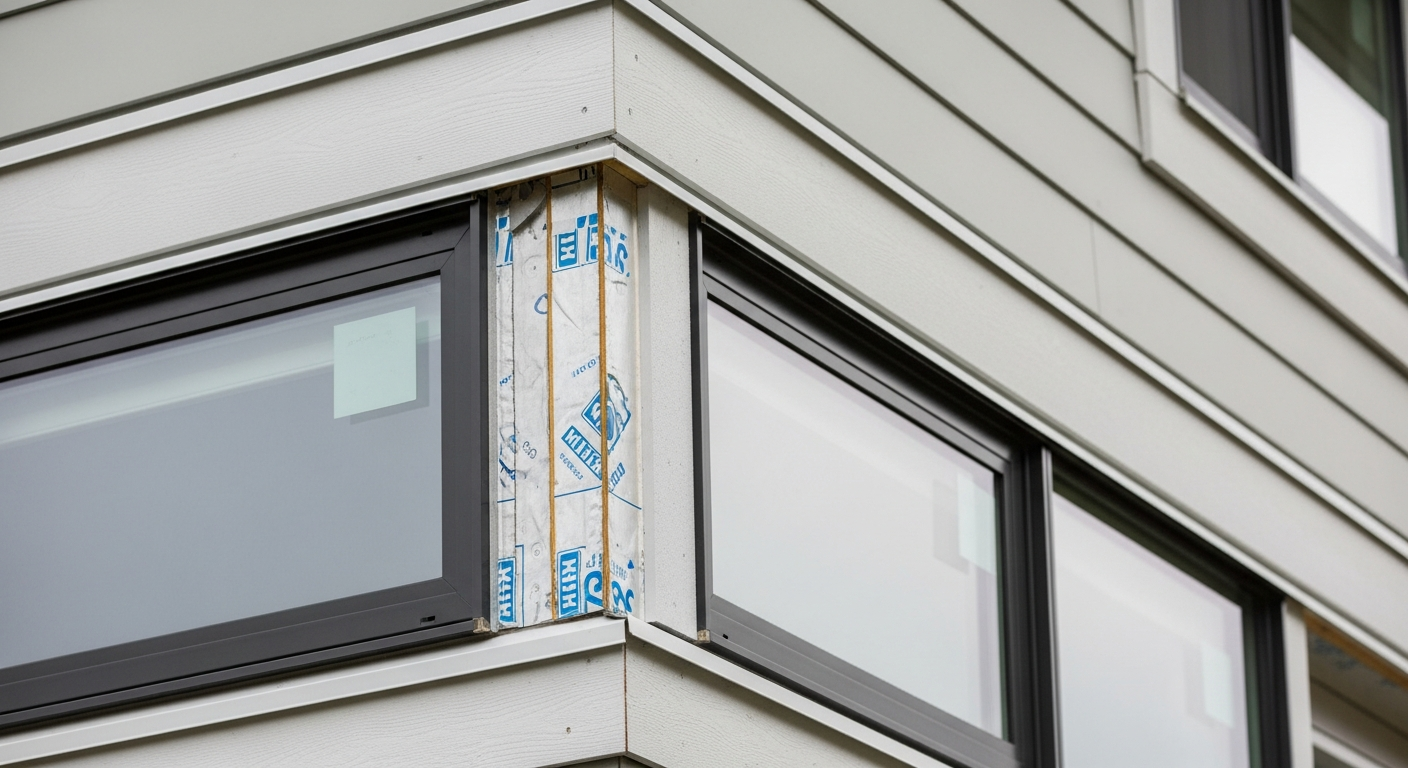
New-construction frame (nail-fin frame): Has a perimeter fin. It nails directly into the rough framing. You use it on new construction. You also use it for full-frame removals where the existing frame comes completely out. It offers better water resistance. It integrates properly with new weather-resistant barrier systems.
Retrofit frame (pocket or insert frame): Installs inside the existing frame opening. It's faster and less invasive. No stucco patch is required. But it slightly reduces the glass area. You're building a new frame inside the old one.
For a same-size swap where the existing frame is sound and undamaged, a retrofit frame is usually the simpler choice, with no stucco patch. Same-size swaps typically take a day; full-home projects take two to three days.
For window enlargements, full-frame rot, or new openings, you need a nail-fin frame. You also need complete rough framing work. That's a different scope. It's documented and priced separately.
This distinction is on your written spec sheet before any work begins. Ask for it explicitly if it isn't offered.
Will New Energy Efficient Windows Lower My Cooling Bills?
The data supports it. The specific figure depends on what you're replacing. It also depends on what condition it's in.
In Temecula's cooling-dominated climate, most of the benefit comes from cutting solar heat gain on summer afternoons.
SHGC is the fraction of the sun's heat striking the window that ends up inside as heat. An SHGC of 0.23 means about 23% gets through. That matters most on west-facing glass in the late afternoon.
The actual effect on your bill depends on your glass area, orientation, HVAC system, and how well the installation is done. Every project is quoted in writing after measure. Contact Drew for a personalized written quote. The exact frame, glass package, and hardware spec are itemized before you sign anything.
What About Sliding Glass Doors and Energy Efficiency?
Sliding glass doors are easy to overlook when you spec windows.
A 6-foot sliding glass door puts a large area of glass in one wall. If it still has an old aluminum frame and early dual-pane glass, it can add more solar heat than the windows around it.
Title 24 treats any exterior door with 25 percent or more glass as a glazed door, and glazed doors must meet the same fenestration limits as windows: U-factor 0.30 and SHGC 0.23 in Climate Zone 10.
Multi-slide and pocket door systems, the large glass wall systems I specialize in, need careful specification. A 12- or 16-foot multi-track system has more frame components, weather seals, and installation variables than a standard slider, and its performance depends on both the frame system and the perimeter installation.
A door replacement on a large sliding or multi-slide unit should come with a written spec. It should show the frame manufacturer, glass unit performance values, U-factor, SHGC, and hardware model. If that documentation isn't offered before you agree to anything, ask for it. A verbal "it's good glass" is not a spec.
Do Front Doors Need to Meet Energy Efficiency Standards Too?
Title 24 sets limits for doors too. In the prescriptive package, opaque exterior doors have a maximum U-factor of 0.20.
Doors with 25 percent or more glass are glazed doors under Title 24 and must meet the fenestration U-factor and SHGC limits.
For solid entry doors, compare rated U-factors and make sure the new weatherstripping seals the full perimeter.
For door installation projects, permit scope depends on whether you're replacing in kind or changing the rough opening. Widening an opening means structural work on the header, so confirm with the City of Temecula Building & Safety Division (permit desk (951) 694-6476) what your job needs before work starts.
When a permit is required, we pull it. CSLB #887882.
What Local Factors Affect Window Performance in Temecula Specifically?
The spec sheet matters everywhere. But Temecula creates specific failure modes. You should know these before you sign a contract.
UV exposure: Temecula's summer sun is strong, and sealants and finishes on south- and west-facing walls take the most of it. Ask what the manufacturer's glass warranty covers before you choose a glass package.
Thermal cycling: Temecula has hot summer afternoons and cool nights. Every part of the window (frame, glass, sealant, and spacer) expands and contracts with those swings, and a unit installed without proper clearance puts extra stress on the glass seal. When that seal fails, the unit fogs between the panes.
Sill drainage: a window sill without a proper back dam or sill pan can direct water into the wall cavity during a heavy rain. By the time you see damage inside, water has usually been getting in for a while.
What Should You Ask Before Signing a Window Replacement Contract?
Here's the checklist worth having before you agree to anything:
1. What is the U-factor and SHGC of the specific glass unit you're quoting? Get the NFRC label values. Not "energy efficient." Actual numbers. 2. Is this a retrofit frame or new-construction frame? Why is that the right choice for my opening? 3. Are you pulling a permit? If the answer involves hesitation, stop. 4. Who submits the Title 24 compliance documentation? The contractor should own this step entirely. 5. What's the frame material? Vinyl, fiberglass, or aluminum with a thermal break? 6. What's the warranty on the glass seal against fogging? How many years? Is it in writing? 7. Does haul-away of the old units come with the quoted price? Some low-bid contractors leave this out. 8. Is all of this in writing before I sign? That last question covers every answer above it.
If a company quotes you "energy efficient double pane windows" without naming the U-factor and SHGC, they're selling a category. Not a specification. Categories don't pass inspections.
How Does Covered Sundeck Construction Complement Window Performance?
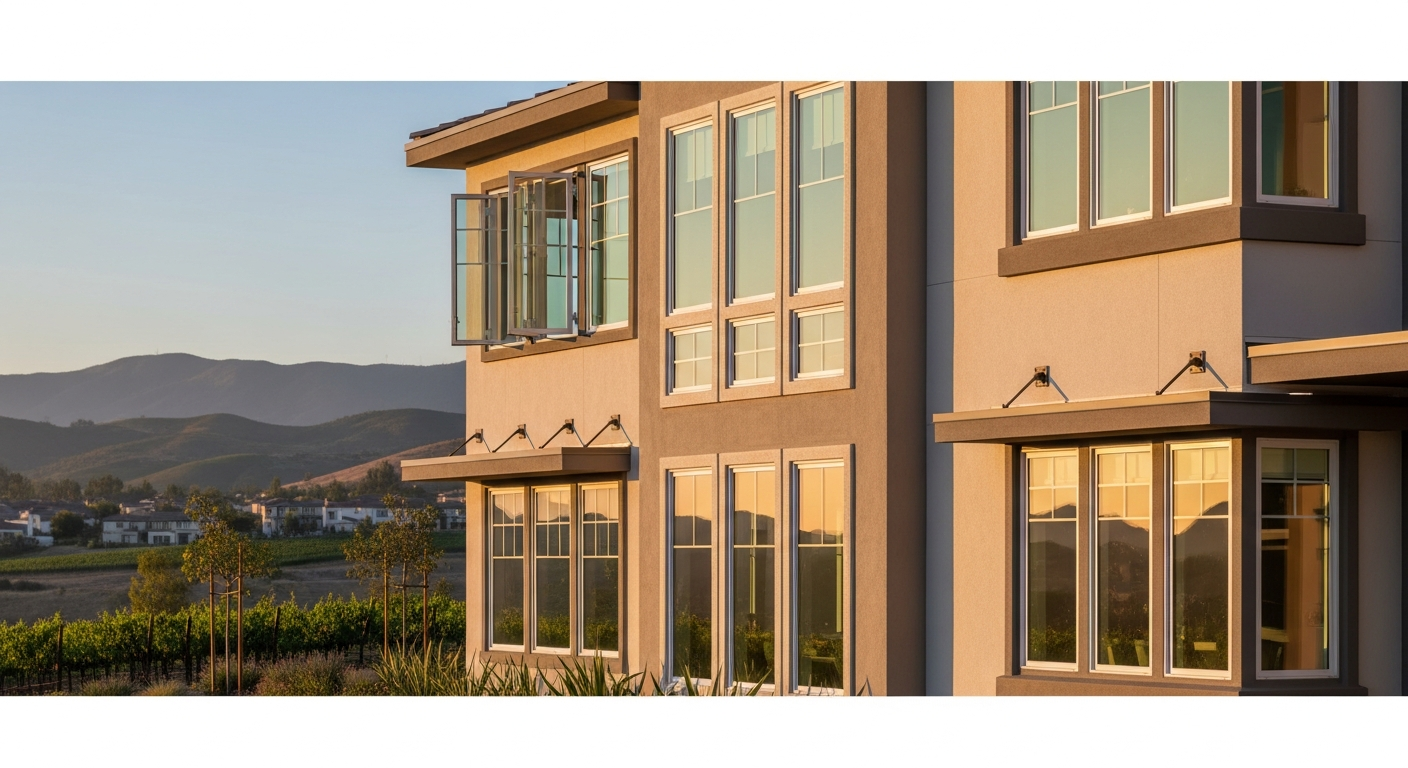
A covered patio or sundeck on the south or west elevation shades the exterior glass. This happens during peak solar hours. That shading cuts solar heat gain through the windows. It happens during exactly the time period when SHGC matters most. Mid-afternoon in Inland Empire summers.
Even a low-SHGC window still admits some solar heat in direct sun. Shade from a well-positioned sundeck construction project works alongside your glass specification to reduce cooling load.
A covered deck on the south or west side shades glass during the hottest part of the afternoon. On a south wall, a roof overhang blocks high summer sun more than low winter sun; the right depth depends on window height and orientation.
It doesn't replace proper window specification. But for homes with minimal overhangs, it's a real complement to a glass upgrade. It's something worth factoring into a whole-envelope conversation.
FAQ
Q: Do I need a permit to replace windows in Temecula, CA?
Inside Temecula city limits, the City of Temecula Building & Safety Division handles permits; unincorporated addresses go through Riverside County. Replacement windows fall under the Energy Code's alteration rules, and glass replaced in an existing sash and frame counts as a repair. Changing the rough opening size or the framing is structural work. Call the city permit desk at (951) 694-6476 to confirm what your job needs, and expect your contractor to pull any permit, not you.
Q: What U-factor and SHGC do I need for windows in Temecula?
Under the 2025 California Energy Code, Climate Zone 10, which includes Temecula, has a prescriptive maximum U-factor of 0.30 and maximum SHGC of 0.23, measured as an area-weighted average of the new windows. Replacement jobs of 75 square feet of glass or less may use U-0.40 and SHGC 0.35 instead. The values come from the NFRC label or, for unrated products, from the Energy Code's default tables.
Q: How long does a full-home window replacement take in Temecula?
Same-size swaps typically take a day, and full-home projects take two to three days. Full-frame removals that need stucco repair add patch and paint time, and large multi-slide doors can add a day. Your written quote includes a timeline based on the actual scope.
Q: Will energy efficient windows make my home noticeably cooler in Temecula summers?
Usually, yes. The main mechanism is lower solar heat gain: a window with SHGC 0.23 lets about 23% of the sun's heat striking it through as heat. The DOE attributes about 25–30% of residential heating and cooling energy use to heat gain and loss through windows, so replacing old aluminum-framed units that have no low-e coating and failed seals addresses a large share of that load. The difference is most noticeable on west-facing glass in the afternoon.
Q: What's the real difference between a regular double-pane window and an energy efficient one?
"Double pane" only means two panes of glass separated by a gap. It says nothing about the gas fill, the low-e coating, the spacer, or the frame. The Energy Code's default U-factor for an unrated double-pane window is 0.58 with a non-metal operable frame and 0.79 with a metal operable frame, both far above the Zone 10 limit of 0.30. An energy efficient window for Temecula has a vinyl, fiberglass, or thermally broken frame, a spectrally selective low-e coating, argon fill, and NFRC-certified ratings. Those specifications should appear on your written quote before you sign anything.
Call Drew at Temecula Windows & Doors — (951) 757-4340 — for a written quote with the exact frame, glass package, and hardware spec. CSLB #887882. Title 24 compliance included.
Every window and door project is quoted in writing after measure. Frame system, glass package, U-factor, SHGC, lockset model, flashing detail, permit fee, and haul-away — all on the spec sheet before you sign anything.
Ready for a written quote?
Call (951) 757-4340 or request a free quote online. Drew will be at your door within a week.