Window Repair in Temecula, CA: 5 Mistakes That Turn a Simple Fix Into a Full Replacement
Window repair Temecula CA: foggy glass isn't always a replacement. Drew at TWD covers 5 mistakes homeowners make before calling a contractor.
 Written by Drew Guthrie, Owner & Lead Estimator · Updated August 1, 2026
TL;DR
- Most window fog is a failed insulated glass unit — not a sign you need a whole new window.
- Frame condition, not age, determines whether repair or replacement is the right call.
- DIY caulk applied over a leaking frame often seals the drainage path and accelerates rot.
- Hardware failures such as worn balance systems and locksets can often be fixed without replacing the window.
- An inspection that doesn't include pulling the sash isn't a real assessment.
- Most window fog is a failed insulated glass unit — not a sign you need a whole new window.
- Frame condition, not age, determines whether repair or replacement is the right call.
- DIY caulk applied over a leaking frame often seals the drainage path and accelerates rot.
- Hardware failures such as worn balance systems and locksets can often be fixed without replacing the window.
- An inspection that doesn't include pulling the sash isn't a real assessment.
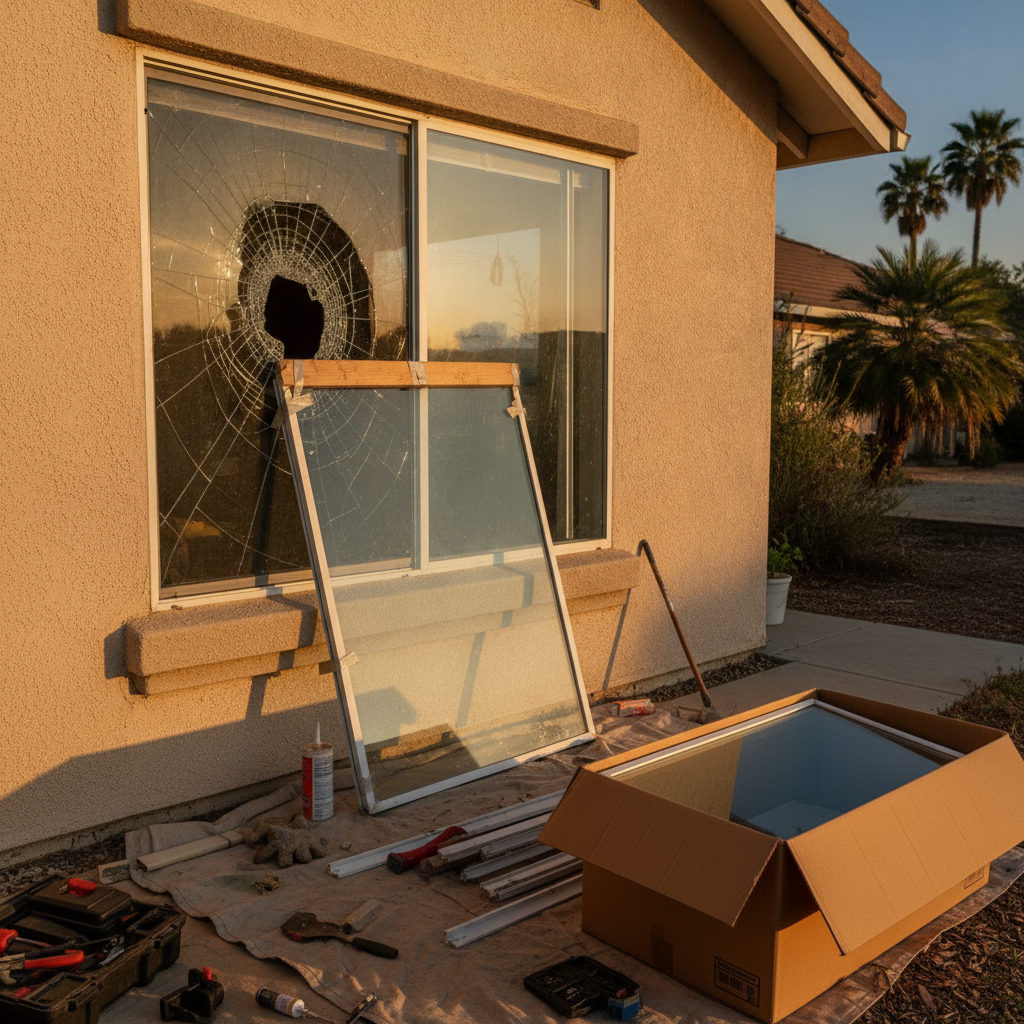
Window repair in Temecula starts with a correct diagnosis. A foggy pane, a sash that won't stay up, or a leak at the sill can each have a repair that costs less than a new window, and each can also be a sign the frame is done. This article walks through five common mistakes and what a proper inspection looks like.
Is Foggy Glass Between the Panes a Sign You Need New Windows?
Not necessarily.
Fog between panes tells you one thing: the insulated glass unit — the IGU — has failed. The perimeter seal on the dual-pane unit broke. Moisture entered the airspace. That produces the haze.
It does not mean your frame is done.
If the frame is still square and solid, and the sash isn't warped, the right call can be to pull the sash and replace only the glass unit: same frame, same rough opening, new glass package. California's Energy Code treats glass replaced in an existing sash and frame as a repair, as long as the new glass performs at least as well as the original.
According to the U.S. Department of Energy, heat gain and heat loss through windows are responsible for about 25–30% of residential heating and cooling energy use. A properly specified replacement glass unit addresses the glass side of that; a full replacement also addresses the frame.
Ask whether a glass-unit replacement was considered. It isn't right for every window, but the only way to know is to look at the frame.
The real question is never just "repair or replace." It's: what condition is the frame in?
What Does Frame Condition Actually Tell You About Repair vs. Replacement?
Frame condition is the real diagnostic. Not appearance. Not age.
A window in a solid frame can be worth repairing, while one in a waterlogged frame often isn't.
Here's the short list of what actually matters:
Is the frame still square? A racked frame won't hold a new glass unit flat. The new IGU seal will fail again.
Is any rot cosmetic or structural? Surface discoloration on a wood frame is different from soft, failing wood in the load-bearing jamb corners.
Are the weep holes draining? Clogged weeps let water pool at the sill. That's where most frame rot starts.
Does the sash operate smoothly in the tracks? Binding or dragging means the frame has shifted or the track is damaged.
A contractor who quotes replacement based on exterior inspection — without pulling the sash — hasn't done an assessment. They've made an assumption.
The diagnostic that matters starts when the sash comes out. That's how you see the frame routing and jamb condition. That's how you find the actual cause of whatever the homeowner called about.
If the frame is structurally sound, repair is usually the correct answer. If the load-bearing sections are compromised — if you're rebuilding structural framing rather than just cutting out surface rot — then replacement becomes the honest call. And when full window replacement is the right answer, we'll tell you that plainly.
How Does Temecula's Climate Accelerate Window Seal Failure?
Temecula sits in California Climate Zone 10, with hot, sunny summers and cool nights.
That heat drives daily expansion and contraction in every part of the window. Over time, caulk joints crack, weep covers loosen, and insulated glass seals fail.
Then a heavy rain arrives after months of dry weather. Water hits flashing and sealant that have been baking all summer, and that's a common time for a hidden flashing problem to show itself: not a slow seep, but a wet sill after the first big storm.
Frame material matters in this climate.
Vinyl doesn't rot, but it moves with temperature, which works glazing beads and seals over time. Aluminum doesn't rot either, but it conducts heat readily, so uninsulated aluminum frames can collect condensation on cold mornings.
For exterior joints, use a sealant made for joints that move, not interior latex caulk, and never use sealant to cover the weep holes. That material choice separates a repair that lasts from one that comes apart at the next storm.
Why Does DIY Caulking Usually Make Window Leaks Worse?
A common scenario:
They saw moisture at the sill. They applied exterior caulk around the frame perimeter. The leak seemed to stop. Then the next rain event came and the damage was worse than before.
Here's what happened. Exterior caulk applied around the frame rarely seals the actual entry point. Many window leaks start at the flashing, where the window ties into the weather-resistive barrier behind the siding or stucco. Caulk doesn't reach that junction. What it does reach is the weep system at the bottom of the frame. Seal those weeps and you've blocked the drainage path. Water still enters through the failed flashing, but now it can't drain. It sits inside the frame and feeds rot in the wood and rough opening framing.
That's the most common DIY window repair mistake.
Using incompatible hardware parts. The hardware section at any home center carries generic parts that look similar to manufacturer-specific components. They often aren't the same. Wrong balance systems bind the sash or pop out of channel. Wrong locksets strip their threads. Mixing incompatible parts can void whatever manufacturer warranty coverage is still in effect on the window unit.
Cleaning with harsh chemicals. Use the cleaners the window manufacturer recommends; strong solvents can damage vinyl frame surfaces.
The DIY tasks that are reasonable: clearing weep holes with a toothpick or compressed air, lubricating tracks with a dry silicone spray, replacing weatherstripping on a standard frame, and adjusting door closers.
Everything involving glass removal, structural frame repair, or sourcing hardware that must match specific manufacturer tolerances needs the right tools and a proper inspection first.
What Does a Legitimate Window Repair Inspection Actually Include?
A real inspection follows a sequence. Skip any step and you're guessing.
Pull the sash. Frame routing, weep channels, and jamb condition aren't visible from outside. Pulling the sash shows what's actually happening inside the system.
Run a water test. Controlled water directed at the frame locates the actual entry point and checks whether the drainage path is working. This distinguishes a window problem from a flashing problem from an original installation defect. They're different situations with different fixes.
Inspect the weep system. Weep holes at the bottom of the frame are the drainage path for water that enters the frame assembly. Clogged weeps cause sill rot. From outside on a dry day, you won't see this.
Check flashing integration. The original installer either integrated the window properly into the weather-resistive barrier or didn't. Bad original installation is the root cause of most recurring leaks. No amount of exterior caulk fixes a flashing defect behind the siding.
Assess hardware function. Operate the sash multiple times. Check that the lockset engages cleanly. Verify the balance system — the mechanism that holds single-hung and double-hung sashes in position — is operating correctly. A failing balance makes the sash drop or resist movement.
Final operating check. After any repair, the sash should operate without binding, the lockset should engage without force, and the weatherstripping should seal across the full perimeter. Not most of it — all of it.
Something clients often don't expect: sometimes the right call is to wait. If a window is borderline but still working, monitoring it through a rainy season before committing to a repair can be the honest answer.
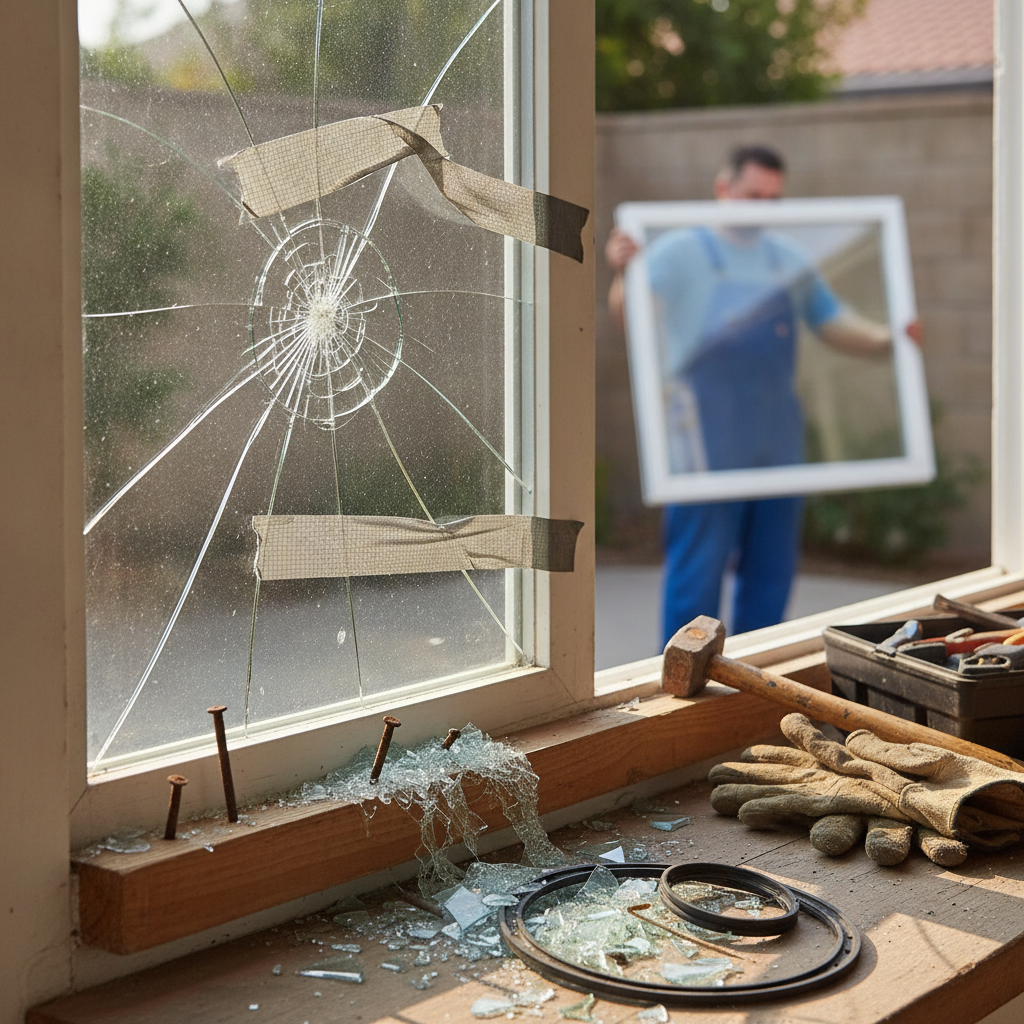
When Does a "Replace It" Recommendation Deserve a Second Opinion?
Here's the pattern.
A homeowner gets a quote for full window replacement. The contractor says the windows are too far gone. The homeowner asks someone else to look.
Scenarios where repair can be the right call:
Balance system failure. Double-hung and single-hung windows hold the sash in position via a balance mechanism. When the balance fails, the sash drops or won't stay open. That feels exactly like a broken window. Replacing the balance — not the entire window — fixes it.
IGU condensation. Fog between the panes is a failed glass unit, not a failed window. If the frame is solid, pull the sash, swap the IGU, done. A contractor positioned to sell replacements may quote the whole window without discussing whether an IGU swap was evaluated.
Sealant failure called structural damage. Water intrusion at a frame corner looks alarming. But if the framing behind the window is solid and the source is failed perimeter sealant from poor original installation, that's a remediation job — not a replacement call. The two don't cost the same.
Frame rot in a door unit. Localized rot in a door frame can sometimes be cut out, treated, and rebuilt rather than replacing the full unit. Not always possible — depends on the extent of rot and the load situation. But it's worth an assessment before assuming the frame has to go. Our door replacement and door installation service pages lay out what replacement actually involves when rebuild isn't the right path.
The standard for seeking a second opinion: if the contractor recommended replacement based on exterior inspection only — without pulling the sash, without a water test, without discussing whether an IGU or hardware repair was evaluated — you don't have a diagnosis. You have a price attached to a guess.
What Should You Know Before Calling for Window Repair in Temecula?
A few things that change how the inspection goes:
Know your frame material. Vinyl, aluminum, wood, and fiberglass each fail differently. Vinyl moves with temperature, aluminum conducts heat, and wood rots when water sits at the sill. Frame material narrows the diagnosis before anyone arrives.
Describe what you're seeing, not what you think it means. Fog between the panes is a glass unit problem. Condensation on the interior face of the glass is a different issue — often interior humidity, not a failed IGU. Visible water at the sill can be a window leak or a flashing problem. The symptom points us toward the right test; it doesn't replace the test.
Permitted work has to meet Title 24. California's Energy Code sets U-factor and SHGC limits for replacement windows: U-factor 0.30 and SHGC 0.23 in Climate Zone 10. Glass replaced in an existing sash and frame is treated as a repair as long as the new glass performs at least as well as the original, so match or beat the original glass specification. The National Fenestration Rating Council (NFRC) rates U-factor and SHGC for certified products.
The National Association of Home Builders' Study of Life Expectancy of Home Components lists vinyl windows at 20 to 40 years. Where your windows fall in that range helps frame the repair-versus-replace decision honestly.
If you're planning adjacent outdoor work at the same time — a sundeck construction project that adds load near window or door openings — that scope gets coordinated in the same written quote so the work is sequenced correctly and the inspections don't conflict.
Call Drew for a Written Quote on Window Repair in Temecula
Window repair in Temecula starts with an honest inspection — not a replacement sales pitch.
If you have fog between panes, a sash that won't lock, a frame showing moisture signs, or a contractor recommending replacement you're not convinced about, call Drew at Temecula Windows & Doors: (951) 757-4340.
Every quote is in writing before you sign anything. Frame condition, glass package, hardware spec, permit requirements, and haul-away — all itemized. No verbal estimates. No surprises after the fact.
Licensed and insured. Title 24 compliance included on every permit-required project.
Test Your Knowledge
1. When you see condensation or fog between window panes, what component has actually failed?
- A. The window frame is beyond repair
- ✅ B. The insulated glass unit seal has broken
- C. The entire window needs to be replaced
- D. The sash hardware is damaged
Fog between panes indicates the IGU perimeter seal broke and moisture entered the airspace. This doesn't necessarily mean the frame or whole window is damaged — often just the glass unit needs replacement.
2. What is the most reliable indicator for deciding whether window repair or replacement is the right choice?
- A. How old the windows are
- B. Whether the homeowner prefers to save money
- ✅ C. The structural condition of the frame
- D. Whether fog is visible in the glass
The article emphasizes that frame condition — not age — is the real diagnostic. A structurally sound frame may be worth repairing, while a compromised frame often isn't.
3. Why is physically removing the sash a critical step in a window inspection?
Pulling the sash allows the inspector to examine the frame routing and jamb condition from the inside, revealing the actual root cause of the problem. An inspection done only from the exterior is just a guess, not a real assessment.
4. How does Temecula's local climate speed up the failure of window seals?
Hot, sunny days and cool nights drive daily expansion and contraction that cracks caulk, loosens weep covers, and wears out insulated glass seals over time.
Ready for a written quote?
Call (951) 757-4340 or request a free quote online. Drew will be at your door within a week.